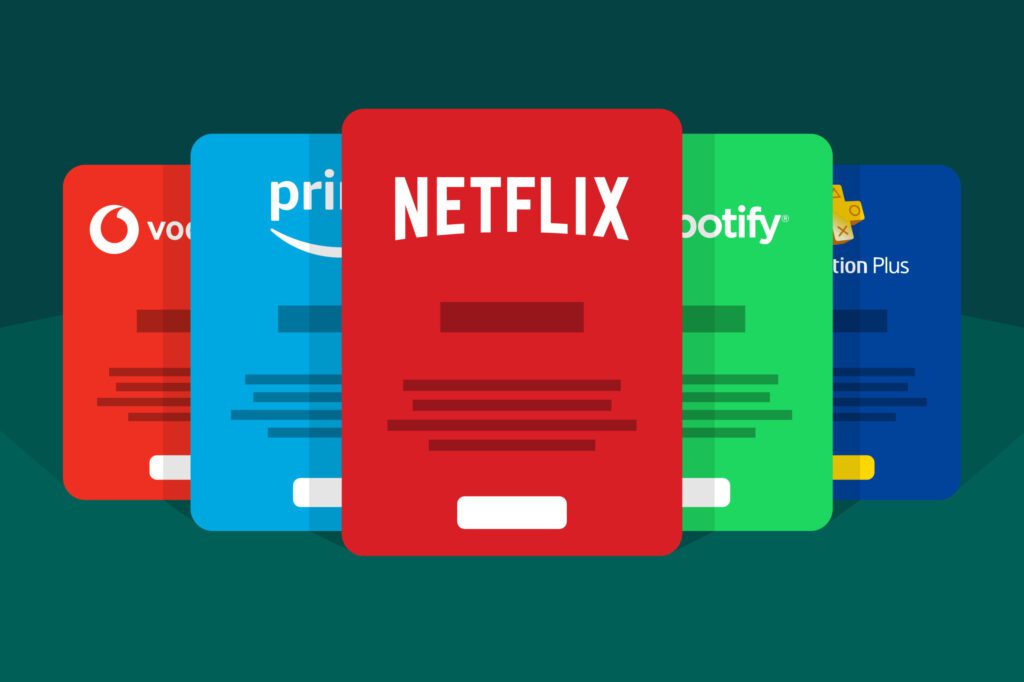
Remember when paying for something meant you actually owned it? Microsoft Office, Adobe, even music and films used to be one-time purchases. That was before companies realised that subscription models could milk the absolute most out of the consumer. Now, Microsoft Office is anywhere between £85-£190 a year. Why charge once when you can charge indefinitely, having no choice but to continue paying, or risk losing their documents forever?
No wonder there has been a rise in subscription cancellations recently. As most of us face a cost-of-living crisis, we are forced to strip back on ‘non-essentials’ — often including subscription-based services like Netflix, Spotify, or Deliveroo. The core problem is that the subscription market is oversaturated. It can even often be predatory. How many services let you pay a lump sum, upfront, or less monthly, despite it costing more overall? If you’re like me, you probably don’t have multiple spare £60 lying around every month, so I always begrudgingly opt for the monthly options, knowing I’ll be paying more in the long term.
Companies quickly realised that subscriptions are far more profitable. Suddenly, anything from podcasts to dog food is costing more than it ever used to. Sure, these are usually premium services, but what about people who can’t easily haul a bag of kibble back home? Why are we supposed to cut down on music and films, and audiobooks, just so we can afford essentials? We’re told to budget more carefully, but simply surviving shouldn’t be the goal.
This is where subscription fatigue comes in. I don’t have to tell you that, although a couple of quid a month on two or three services doesn’t seem like a lot, it suddenly adds up to more than you’d ever willingly spend. Especially when the cheapest tiers come with ads and less premium features, the £60 a year for, say, Paramount+ really doesn’t seem worth it. We don’t have enough spare change to be paying for multiple services at once. Most of the time, you don’t even own the thing you supposedly ‘bought’.
Physical media, however, is having a glorious revival (per my last article). CDs, iPods, and DVDs have all been making a comeback recently. The appeal is simple: once you buy it, you own it forever. If money becomes tight and you must cancel your Amazon Prime subscription, that film you ‘purchased’ (separate from the subscription you pay monthly, obviously. Ads included) is gone forever.
I know how hard it is to cancel a subscription. Over the summer, I got really into NADDPOD, a Dungeons and Dragons actual-play podcast. Though some episodes are free, many are paywalled, including bonus content and the talkback shows. Being slightly too obsessive, I decided to pay the £5 a month to access the full archive as well as extra content. Not too much, right? But, along with my £4 a month National Trust subscription and a £1 Friends of Al-Aqsa subscription, I was suddenly paying £10 I didn’t have. As a student relying on support from home, that £10 quickly became unaffordable (I am realising now that that is, ironically, quite subscription-esque). Sadly, I had to cancel my beloved NADDPOD subscription, with my NT membership locked into a yearly contract, and supporting Palestine (if only with pocket change) is much more important to me than D&D. I am sad without my bonus content, but, like most people, I get by on the bare minimum. We often have no other choice.
What is the solution to this? I have to say, it’s not entirely clear. As much as I love physical media, it’s hard to acquire the shows/films I enjoy in this world of digital-only, straight-to-streaming media. Last time I checked, Star Trek DVDs were about £20 a pop. With Trek having 12 shows at the time of writing, that adds up to way too much, even I am willing to spend on Star Trek. And I have a lot of Star Trek DVDs, all salvaged from charity shops. I don’t think I am legally allowed to endorse piracy, but it is a common alternative to the capitalist parasite. Most companies have even banned password sharing, so you can’t even split subscriptions with a friend anymore.
It may be difficult, but perhaps the only solution is collective action. Mass-cancellation of our subscriptions will show these companies that we won’t stand for their exploitative, money-draining practices any longer. They can’t exist without us. As much as they try to make us think the opposite, they need us. Our hard-earned money is the only reason Netflix or Apple Music survives. It is our most powerful tool.
Edited by Olivia Lassman and subedited by Lydia Gallagher


Leave a Reply