Close your eyes and think of an apple.
Do you see a bright red fruit, shiny and detailed, perhaps sitting on a table? Or do you hear a voice in your head saying ‘apple’, maybe followed by a stream of related thoughts? People often assume that everyone thinks the same way, but human thought varies dramatically. Two of the most talked about styles are visual thinking and verbal thinking (thinking in images and experiencing an inner monologue). Neither is better nor worse, but they shape how we remember, plan, and understand the world.
Thinking in Images: The Visual Mind
For some, thoughts appear primarily as pictures, scenes, or mental movies. This kind of thinking is often vivid and spatial. When planning their day, a visual thinker might see themselves walking into a room or imagine objects moving through a space. They often excel at pattern recognition, spatial reasoning, and creative tasks, such as art or engineering. For these people, memory can work like a photo album. Instead of recalling a sentence someone said, they may remember the scene: where they were sitting, the lighting, or clothing. However, visual thinking can also have challenges. For example, putting complex ideas into words may feel slow or frustrating, and explaining abstract emotions can be harder when thoughts don’t naturally arrive in language.
Thinking in Words: The Inner Monologue
Others experience thought mainly as language. Their minds narrate experiences, analyse situations through sentences, and rehearse conversations internally. This is often called an inner monologue. Verbal thinkers may talk themselves through decisions step by step, replay conversations, imagine future ones, and use words to regulate emotions. This style is closely linked to reading, writing, and structured reasoning. Verbal thinkers often find it easier to articulate feelings, debate ideas, or learn through lectures and discussion. On the downside, an inner monologue can become overwhelming. Constant self-talk may turn into rumination, anxiety, or harsh self-criticism, especially during stressful periods.
Not Everyone Has an Inner Monologue or Images
Most importantly, not all minds fit neatly into these two categories. Some people report little to no inner monologue, and others experience aphantasia – a condition where mental imagery is minimal or absent. These individuals still think, reason, and imagine, just through different cognitive routes. For example, through abstract concepts, bodily sensations, or emotional cues. Many people also switch between modes depending on the task. You might visualise a route on a map, but use words to rehearse an argument. Thought is flexible, not fixed.
The Science Behind Different Thinking Styles
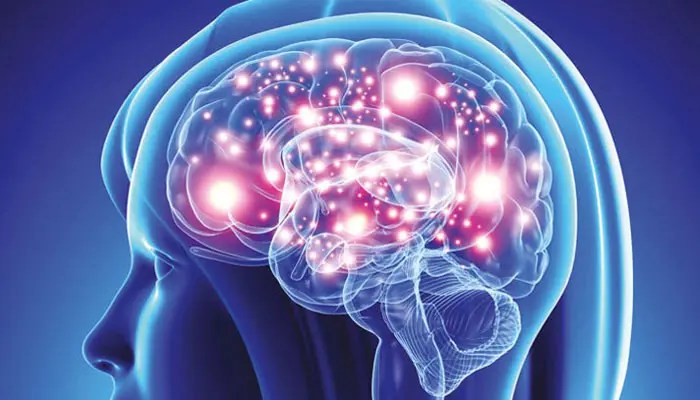
The labyrinth filled with paths of neurotransmitters, firing thousands of times per second across billions of neurons, is what we call the brain. It is one of the most complex and fascinating forms of matter known, driving ongoing research into how and why our minds work as they do. Neuroscience suggests that differences in thinking styles are linked to how brain networks communicate, rather than to a single “thinking centre.” Visual thinking is associated with stronger activation and connectivity in regions involved with visual processing, such as the occipital cortex and parts of the parietal lobe. These are associated with spatial awareness and mental imagery. In contrast, inner monologue and verbal thinking are linked to language- related areas, including Broca’s and Wernicke’s. Research using brain imaging has shown that people vary widely in how strongly these networks are engaged, even when performing the same task. Importantly, these differences are not signs of ability or intelligence; they reflect natural variation in cognitive processing shaped by genetics, development, and experience.
Why These Differences Matter
Understanding different thinking styles can improve communication and empathy. A visual thinker explaining an idea might rely on metaphors or gestures, while a verbal thinker might prefer detailed explanations. Misunderstanding often arises, not from intelligence or effort, but cognitive mismatch. In education and work, recognising these differences can lead to better teaching methods, clearer teamwork, and a more inclusive environment. One person’s ‘overthinking’ may be another person’s natural processing style.
One Mind, Many Ways of Thinking
Whether you think in pictures, words, both, or neither, your mental experience is not strange; it is human. Diversity of thought is one reason people solve problems creatively and see the world from multiple angles. The question isn’t which is superior, but how understanding our own minds and others’ can help us think, communicate, and coexist better.
Edited by Robin Smith






Leave a Reply