Edited by Jess Dunipace & subedited by Eva Yuille
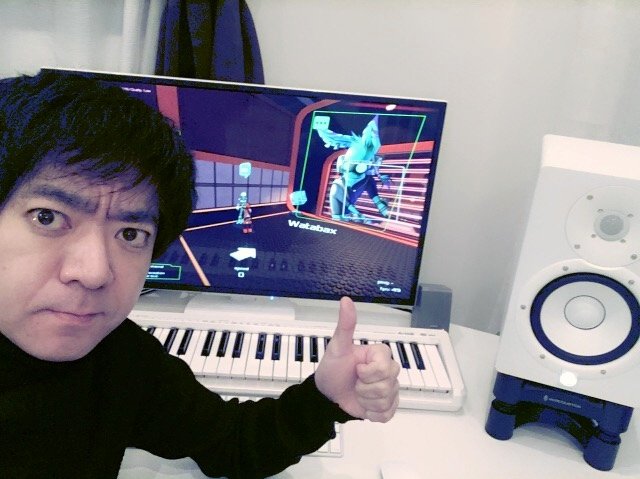
“A family guy must be a funny guy in the moments of his life.” This frankly profound and inspiring quote comes to us from one funky uncle and internet shitposter, Hideki Naganuma.
Chances are if you’re as into video game music as I am (I did write an entire article on the broad subject of it after all) then you’re at least somewhat familiar with Naganuma’s work. Nowadays, he’s probably best known for a few of his game soundtracks in the early 2000s and occasionally posting Family Guy memes on Twitter, but I honestly think his music is some of the most unique and influential in the entire gaming industry.
Born in Otaru, Hokkaido in 1972, Hideki was interested in music at a young age, which began with learning the electronic organ at five years old after being inspired by his older sister. In his teen years he gained an interest in western musical styles such as jazz, hip hop, rock, and funk. All of these would clearly influence his own music. From 1993 to 1997 he worked as a DJ and bartender at Blue Note Tokyo, where he was exposed to more international musical styles, growing disillusioned with the monotony of J-pop and more interested in alternative music genres. After seeing an ad from SEGA looking for musical talent, Hideki sent some demo tapes of his work to the company and was soon hired. His early work was on games such as Hip Jog Jog and Sega Rally 2, but what really gained him attention was his work on Jet Set Radio.
Though not the sole composer, as he worked with Richard Jacques and Tomonori Sawada, Naganuma’s musical style was the absolute standout of the game, alongside its pioneering cel-shaded art style, which is still seen in video games today. My favourite tracks of his from this game are undoubtably ‘Let Mom Sleep’ and ‘Sneakman’, both of which capture the game’s rebellious and funky style perfectly, along with the more edgy attitude SEGA presented itself with in the late 90s.
But what exactly is Naganuma’s musical style? Well, it draws upon many different genres, but usually boils down to frequent and effective usage of audio samples. Sega games used a fair few samples in their music (take the Japanese and European soundtracks of Sonic CD (1993) for example), but none to the extent Naganuma did. There exist numerous videos on the internet that compile every sample used in his earlier tracks, and they’re worth a look to see the clear passion and work that went into them.
Anyway, the game received a sequel in 2002, Jet Set Radio Future, which brought back the previous music composers along with implementing tracks from many different bands from around the world (my favourite has to be ‘Birthday Cake’ by Cibo Matto). The game itself dialled everything from the original game up to an eleven out of ten, with its themes, future technology, and impact on artistic expression. Once again, Naganuma’s music is absolutely the standout of the soundtrack, outdoing his work on the original; the most well-known of these is without a doubt ‘The Concept of Love’, with an edgy, funky beat and heavy sound introducing the style of the game perfectly. This track also starts an interesting trend of Naganuma sometimes sampling American civil rights speeches, with its main lyrical sample coming from Stokely Carmichael at the Free Huey Rally. Other tracks which sample similar speeches are ‘Wrapped in Black’ from Sonic Rush (2005), which samples Malcolm X’s “Message to the Grass Roots” speech; and “Sell Your Soul” by The Watts Prophets. More recently, one of his musical contributions to Bomb Rush Cyberfunk (2023), “Da People”, again samples from Carmichael.
His later work whilst at SEGA includes the soundtracks for the arcade game Ollie King and for Sonic Rush, which continue his distinct style but with a wider range of genres and a more modern sound. The former even remixes some tracks from Jet Set Radio Future, notably ‘The Concept of Love’ and ‘Teknopathetic’. The latter is, surprisingly, the only Sonic game Naganuma composed for, with tracks like the previously mentioned ‘Wrapped in Black’ along with ‘Back 2 Back’ and ‘What U Need’ being the standouts. Despite not working on its sequel, Sonic Rush Adventure (2007), his work clearly influenced the game’s composers, with its tracks closely replicating his style. To this day, it ranks among the best of the Sonic series music, and that’s with high competition.
In 2008, Naganuma left SEGA to become a freelance composer. However, he continued to compose music for their games under the alias “skankfunk”, with titles including the Yakuza spinoffs Kurohyō: Ryū ga Gotoku Shinshō (2010) and its sequel (2012), and Super Monkey Ball 3D (2011). From the former, ‘YOUR KNIFE FEELS GOOD’ is probably the best track of his, with its aggressive electronic sound capturing the intensity of the game’s combat.
Since these, Naganuma has worked on less video game soundtracks, but his unique style and funky beats remain popular and influential to this day. I see his story as an inspiring showcase of artistic expression, one that transcends the games his music is featured in and still impacts people today, even those that didn’t grow up playing those games. If any of this has been interesting to you, I absolutely recommend giving the soundtracks mentioned here a listen. It’s definitely some of my favourite music, and there’s a good chance it could become some of yours as well.



Leave a Reply