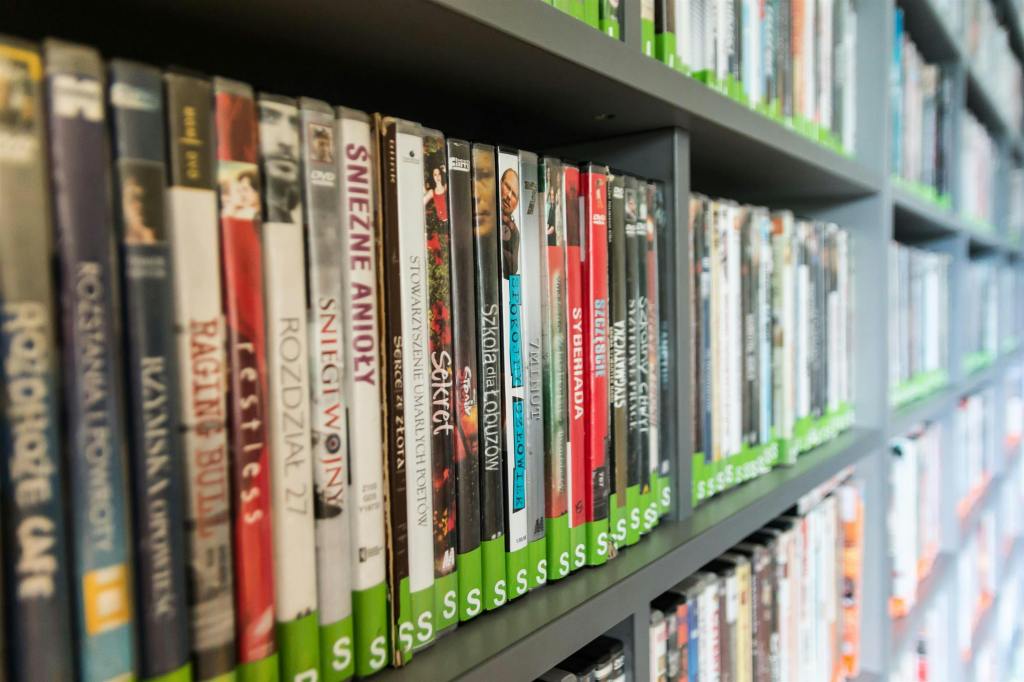
I’ve always been a physical media lover, spending way too long in Waterstones admiring all the pretty front covers and illustrations. eBooks and audiobooks just don’t quite do it for me, mostly because I start zoning out and then later realise I haven’t actually absorbed the last three chapters (years ago, I became really good at Temple Run because it was the only thing that could keep me focused on an audiobook). DVDs, though, were a staple at my house growing up. As a special treat, my nanna would sometimes let me pick out a DVD at the shop. I remember when my local Sainsburys stripped the DVDs from their aisle, and I was devastated. I think I cried when our town’s Blockbuster shut down.
Suffice to say, I am a physical media fan. These days, physical media is often a trend, such as the recent MP3 player trend or DVDs making a comeback. I don’t think this is necessarily a bad thing. Yes, consumerism and TikTok fads are terrible for the environment at worst and annoying at best, but physical media is so important. In the days of streaming services and subscription-based models, owning something physical, real, is revolutionary.
This is why I vowed to myself at the start of my Star Trek obsession that I will buy any Star Trek DVD I see in a charity shop (no repeats, of course). I have stuck to this promise. My small town has what my sisters and I call ‘the charity shop circuit’: about ten charity shops in town, nine of which sell DVDs. I have had some excellent finds in these: the JJ Abrams trilogy on Blu Ray (bought even though I hate that trilogy); a Deep Space Nine season one boxset; even all six original series films on VHS. They are pride of place on the DVD shelf in the living room.
Although convenient, streaming is also a deadly predator of physical media. In the great streaming service purge of 2023, when many (particularly queer) shows such as Grease: Rise of the Pink Ladies, Willow, and even the kids’ show Star Trek: Prodigy were completely removed from their home sites. They weren’t released on DVD, because who uses DVDs anymore? They were, therefore, lost forever. The only option you had if you wanted to watch it was to pirate it (often just as volatile as streaming services themselves) or managing to burn the series onto a DVD so it would be, in some capacity, preserved. I’m sure I don’t need to tell you how poorly this reflects on the industry. Imagine working on a show for months, whether as a writer, producer, actor, runner…only for all that time and effort to be completely erased? It’s an appalling way to treat people and the art they create.
The consumer – us – is also being swindled. Take Amazon Prime, for example. Not only do you pay a monthly subscription fee, you also have to pay to either rent or buy a film or show. Renting is the cheapest option; it’s available for 48 hours and then if you want to watch it again, you have to rent (or buy) it again. This is the one and only time I’ll condone streaming: a lot of the time, you don’t watch a film very often. Having to buy a DVD only to watch something once and then have it taking up valuable storage space in your home, collecting dust, is frustrating. But I’d say the benefits deeply outweigh the one con. Especially in today’s economy, streaming services are not always our first monetary priority. Say you end up cancelling that Amazon Prime subscription—where does your film go? You no longer own it, despite paying money for and ‘buying’ it. You cannot ever ‘own’ something digital.
Of course, it’s not just film, TV, and music that’s been feeling the wave towards physicality. Printed photos are precious keepsakes amongst my peers. In my Uni bedroom, I have pictures of my girlfriend; my best friend from home; my sisters. I keep a polaroid of me and my girlfriend in the back of my phone case. I have a digital camera, and I know people with polaroid cameras or film cameras. Memories are, of course, important. They make us who we are. From Ancient Greek coins with depictions of gods, to romantic Victorian lockets, to the photo walls of our teenage bedrooms, physical reminders of who we are and who we love have always been a core part of our identities and lives. A digital photo album just doesn’t have the same effect. And it poses the same danger as streaming shows —what if you lose your phone and your memories are gone forever? What if you can no longer pay for storage on the cloud and have to delete pictures of your family to make space? The ephemerality of digital media means that we can never quite be certain if we’ll be able to keep our memories forever.
Hobbies like scrapbooking or journalling can be remedies to this fear. Even just printing out a few pictures on normal paper and sticking them in a notebook can help maintain that love and comfort we feel when looking at a picture of friends or family. To me, it seems like hands-on, physical hobbies are one of the most important things we can do for ourselves and for each other. Making something real that engages your senses is vital to our happiness. Baking, sewing, exercising—these things are slowly being taken from us in the name of convenience and efficiency. Archivisation as a hobby is essential to the modern world. Digital and online content is simply too volatile. It is at mercy to the whims of whichever multi-billion company decides it is no longer profitable enough.
The pursuit and/or enjoyment of physical media, therefore, is both a hobby and a means of survival. We cannot rely on streaming services to treat their artists with the respect they deserve. These subscription-based models mean that we no longer own anything. We must preserve art and music as much as we can.
Edited by Eva Yuille
Subedited by Jess Dunipace


Leave a Reply