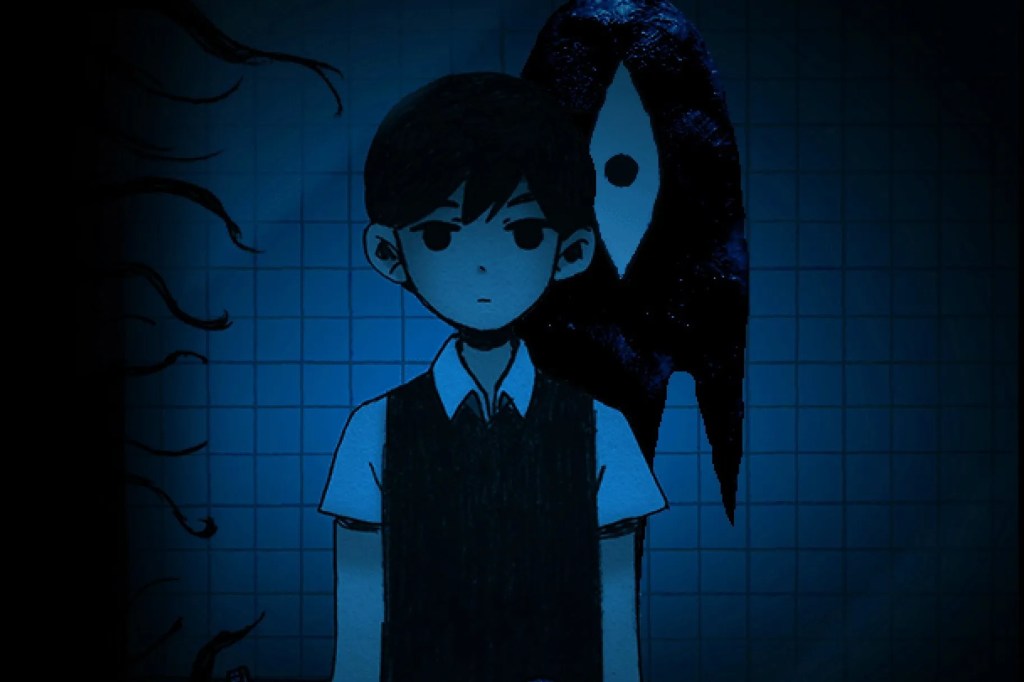
OMORI is a 2020 role-playing video game developed by the indie studio: OMOCAT. Throughout the game, the player controls a hikikomori boy (someone who lives in extreme social avoidance and has isolated themselves from the outside world) named Sunny and his Headspace alter ego Omori.
OMORI is a beautifully written game with a distinctive art style and memorable characters. On the surface, its story appears simple: an adventure with friends to find someone who has gone missing…But as the story unfolds, it becomes clear that there is far more beneath the surface…
Spoilers for the game ahead!
So, what is Headspace? Headspace initially presents as an innocent fantasy world, but as the game continues, reveals to be something darker. In this case, it’s a psychological response that mirrors real-world avoidance and escapism in response to repressed trauma. All of which can be recognised in mental health research, demonstrating how short-term emotional safety can prevent long-term recovery.
After the prologue, you’re introduced to White Space with the line, “you have been living here for as long as you can remember,” representing Sunny’s mind after four years of isolation (a hikikomori state). It presents as a ‘blank’, neutral space where he hides from the truth of his trauma. This mirrors what mental health professionals describe as emotional numbing, which is a common response to trauma in which individuals detach from feelings or memories that are too overwhelming to process.
Afterwards, you enter a door that leads into Neighbour’s room, a room that’s vibrant and colourful, featuring various objects that resemble many of Sunny’s toys he used to play with. The room also features a large pink tree as well as a long table holding items, specifically the photo of ‘someone familiar’ – which can be seen multiple times throughout Headspace. While this ‘familiar’ person is never stated directly, it is implied to be Mari, Sunny’s deceased sister. A constant reminder of what him and Basil, his best friend, have done.
From there, Omori and his friends venture to the park, meeting their real-world counterparts before travelling to Basil’s house on the outskirts. While this distance may initially seem insignificant, it symbolises Sunny’s attempt to maintain control over Headspace by keeping Basil away, as he is connected to the ‘truth’ of Mari’s death. Psychologically, this reflects avoidance: Sunny restructures Headspace to “push memories of the event out of their mind,” which is a process associated with PTSD.
Basil becomes a constant reminder of the truth, frequently asking Omori if he remembers ‘something’, referring to Mari. His eventual disappearance in the game represents Sunny’s subconscious attempt to repress these memories entirely, erasing Basil from Headspace to avoid confronting his guilt.
However, like most things, the truth constantly tries to break free. In OMORI, it appears in the different forms of ‘Something’ which are manifestations of Sunny’s guilt. If players go through the Hikikomori route, Omori resets Headspace as a result of the truth escaping, desperately trying to take back control and numb the trauma that happened 4 years ago. In terms of a real-world trauma response, supressed memories often return through intrusive thoughts or imagery. The NHS notes that often distressing imagery can ‘re-experience’ themselves unexpectedly, which is something Omori visualises through the ‘Something’ appearances.
To clarify, Omori is a manifestation of Sunny’s supressed feelings, self-loathing, and denial. Unlike Sunny, Omori is portrayed as emotionless or stoic, only existing to protect Sunny from painful memories, hence why he takes over in the Hikikomori route to reset Headspace. Additionally, Omori is a play on hikik’Omori.’ This is reinforced in this specific route as Sunny never leaves the house to meet Kel, delaying his ability to confront reality and accept the truth.
Regardless of what route you choose, players will eventually find themselves in Black Space, an eldritch-like space that symbolises Sunny’s repressed memories that he’s forced away. As you explore Black Space, you go through multiple distorted manifestations of Sunny’s fears.
After overcoming another ‘Something’ that is in the form of a distorted version of Basil, Sunny ends up in a peaceful meadow before he returns to a figment of his home where he discovers metaphorical photos of the incident, recalling what truly happened.
Near the end of the game, Sunny faces Omori in White Space where he battles him for control one last time, symbolising him accepting the truth and finally moving on from his trauma.
Most players are unlikely to choose the Hikikomori route as the game encourages progression through the normal route, also known as the true ending, where Sunny confronts his trauma and reveals the truth to his friends. However, the contrast between the two outcomes is significant. In the ‘Omori’ route, Sunny becomes overwhelmed by guilt to the point Omori takes control and ‘saves’ him, protecting him from immediate pain. This protection comes at the cost of Sunny’s agency and recovery, suggesting that while avoidance may provide temporary relief, it ultimately prevents healing.
OMORI presents Headspace as a place of comfort and emotional safety. Through the control and the erasure of painful memories, Sunny avoids confronting his trauma, reflecting real world patterns of emotional avoidance as seen in mental health research. Yet as the game showcases, the truth cannot remain buried indefinitely.
By forcing players to explore a place that avoids the truth, OMORI demonstrates the harsh reality of escapism. Headspace acts not as a solution, but as a reminder that recovery begins not by forgetting, but by addressing what has been repressed, as temporary relief only delays the eventual healing from trauma.
Edited by Robin Smith
Subedited by Lydia Gallagher





Leave a Reply