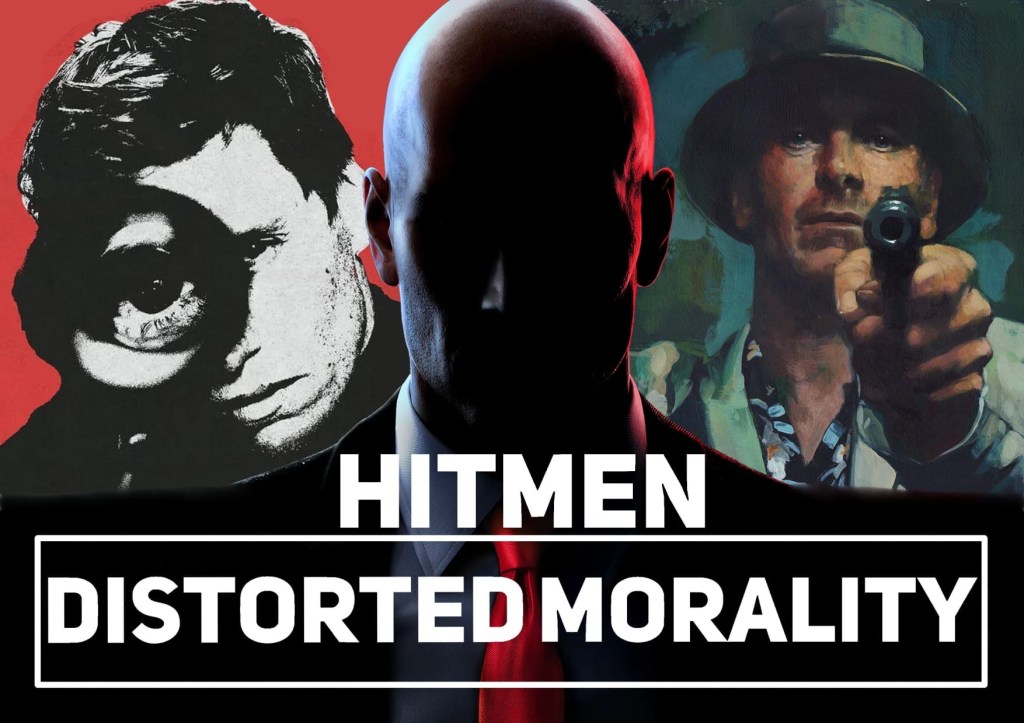
Have you ever watched someone cross a line, only to defend them? Maybe it was a family member or friend, whose actions you had to rationalise afterwards? If so, then congratulations, you have empathy. Oh wait, never mind, that also means you’ll condone psychopathic murders and be attracted to them, so no gold star for you. Obviously, that’s an extreme example of empathy, but that’s what I’m interested in. Through fictional characters, we as an audience are more open to extreme personalities – in this case assassins. The three assassins are: The Jackal from The Day of the Jackal, Agent 47 from Hitman: World of Assassination, and the Killer from… The Killer. Each of these examples are harder to empathise with than the last, and yet, the audience still does. Let’s dive into exactly how that is the case.
It’s almost obvious to see why we empathise with this assassin, but it’s a great place to start understanding the method of this predicament. Alexander Dougan, ‘The Jackal’, is an ordinary soldier who witnesses a UK war crime that changes his allegiance, becoming an assassin to provide for his family, with this last job giving him the money to retire. To help us, we will use The Morality-As-Cooperation Theory, which states seven measures of morality: “family values, group loyalty, reciprocity, bravery, respect, fairness, and respect for property”. Meanwhile, the measures for immorality are: “selfishness, disrespect, disregard for property, disregard for family, brutality, overt sexualization, and engaging in criminal behaviour”. Using these measures, The Jackal checks an equal number of boxes on both sides. Yet in judging him, we root for him, assuming that he leans towards morality even when we know it’s even at best (murder and respect for property each count for a ‘point.’) So why do we just blatantly ignore his sins and focus on his virtues? It is because when we empathise with someone, we put ourselves in their shoes. What’s more, in his essay on anti-heroes, Fitch suggests we “hold onto the hope of potential redemption” when assessing someone, for the chance that we would receive the same treatment when the roles are reversed. In short, we are open to second chances in others, in the hope that they might give us a second chance in return someday.
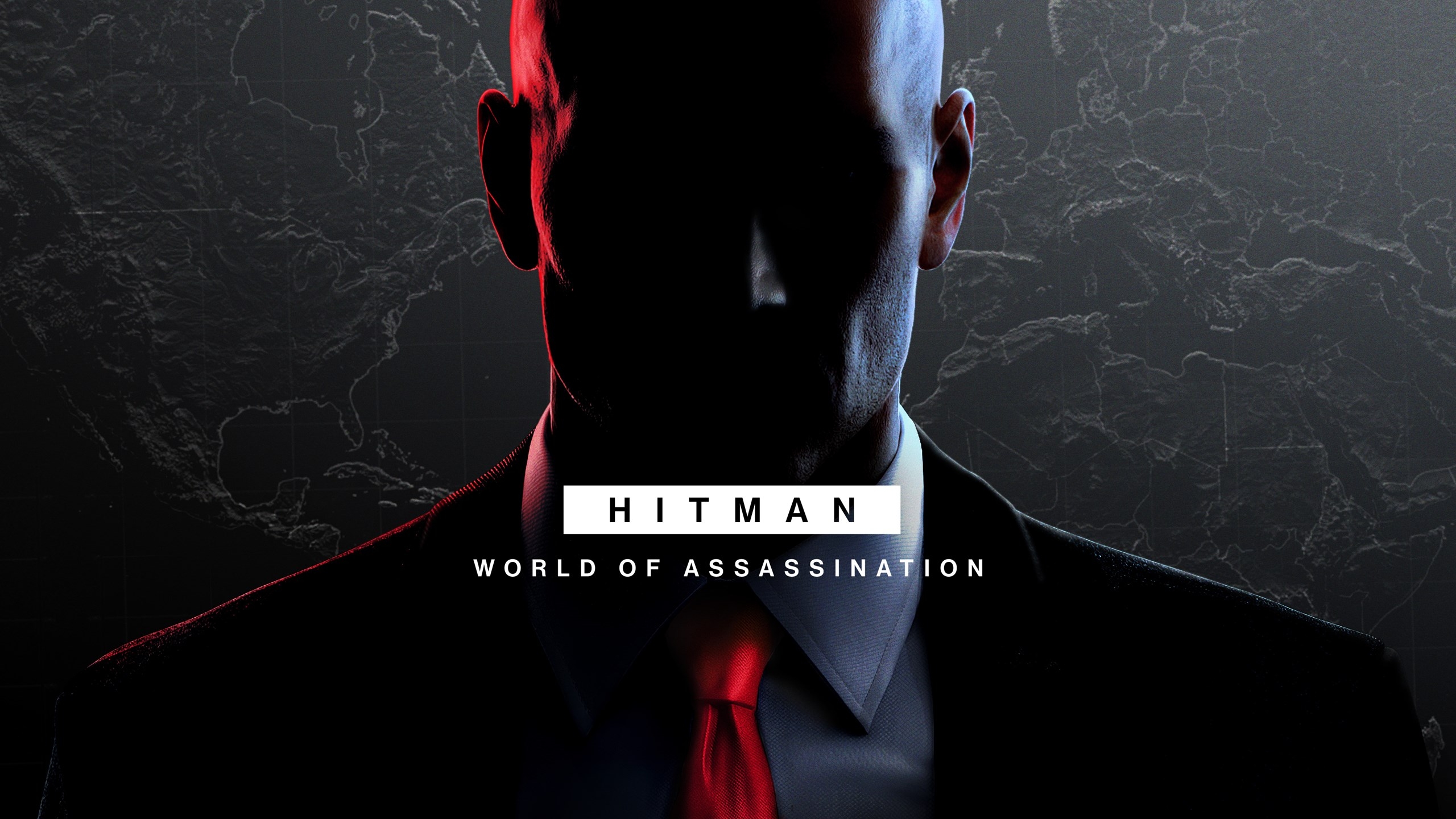
Second on our hit list is ‘Agent 47’, in the video game trilogy Hitman: World of Assassination, where we’ll be looking at how action and stylistic choices affect our perception (I’ll only be focusing on canon story events, not an action any player could potentially make). With 47 we are drawn to the spectacle of his world, as he globe-trots to beautiful locations, killing those with more riches than we could dream of, with weaponry most of us have never even seen. It’s the same reason we’re drawn to other action franchises like James Bond – their world is so close yet so far from ours. While we could visit Paris on holiday and sightsee, we wouldn’t be breaking into a billionaire’s black-market auction to assassinate its host. Their thrills of adventure are attractive to our comparatively boring lives, where “empathic experiences are manipulated by stylistic effects and suspense”, as Margrethe Vaage puts it in her paper exploring empathy with anti-heroes. To further prove this blinding point of attraction, consider the difference between Agent 47 and James Bond. The first is a cold, practically lab grown assassins who kills whomever he’s told to by his wealthy, underworld bosses; a recipe for complete immorality. On the other hand, James Bond is a culture and fashion icon, whose name is known globally as a hero. Yet he too is callous. His orphaned past makes him malleable to become an agent, as he also follows orders to kill whomever his boss commands. While the obvious answer to this ‘similarity’ might be that Bond works for the ‘good guys’, whilst 47 works for some evil private billionaires, even that distinction is blurry. Today we have billionaires like Trump as president with a cabinet worth $340 billion, and military forces of both the UK and USA committing war crimes in the middle east. Are these not the identifying features of 47’s bosses, being rich and having innocents harmed or killed? If there isn’t a real difference between 47 and Bond morally, as they both follow immoral leadership, then what does separate them? Fancy clothes, travelling the globe, a sense of dry humour? Well, they both have these traits, so what is it? Hair? That’s the only real difference I can see, a bit of charm and some good looks. Is that really all it takes to sway our morality?
Which brings us to The Killer, directed by David Fincher. The film depicts a series of assassinations executed by the Killer, (yes, that’s his name), with each death peeling back a layer of his perfectly constructed psyche. So far, we have judged morality (or lack of) in these anti-heroes via family values, and through the distractions of humour, glamour and beauty, which are all reasonable excuses for empathising with them. Yet here in The Killer, we discover just how easily we are swayed. The Killer has no allegiances – “I serve no God or country, I fly no flag” – nor family, with his girlfriend only receiving seventy seconds of screentime. The gadgets of MI5 are now ordered on amazon, and without the veil of glamour, the actions seem colder. Our moral compass is usually distracted by superficial elements like wealth, good looks and smooth talking. The Killer strips this all away. Even the globe-trotting that draws us to 47 doesn’t apply here, as iconic locations like Paris, New York and New Orleans have their identity sucked out of them, with Fincher’s trademark colour grading blending each location into a single, desaturated space. So why do we empathise with him? It’s his sheer expertise. Ironically enough, we are drawn to his skill, his calculation, his ability to kill efficiently, and nothing else. This taps into the “what is beautiful is good” fallacy, which is the assumption that beautiful people are “smart, socially skilled and powerful,” as this article puts it, and thus good and to be trusted. However, I believe “pretty is good” works both ways, with The Killer’s skill at doing his job causing us to be attracted to him, marvelling at his precision, admiring his skill or even envying his sheer drive. This would naturally evolve into us wondering what we would be like with his traits. I certainly wish I had his immense drive sometimes, don’t you? The issue is, once we imagine him in our situation, we begin to imagine the opposite and begin to empathise. Once we’ve started to imagine ourselves doing his actions, we would rationalise everything with mountains of reasoning and so, this killer with no emotion, with violence as his only tool somehow becomes palatable to us. Thus, we see just how malleable our moral compass is, and how easily it can be manipulated.
Overall, I think the average audience member being able to empathise with immoral extremes is actually a good thing. It means we are a forgiving society, capable of giving second chances to even the worst of us once we have context. A significant exception, however, is social media boycotting, where that lack of empathy comes from the distance between us and the celebrity. They are in fact ‘othered’ due to echo chamber rulings, like Bella Ramsey recently being labelled an untalented actor propped up by nepotism, simply because her version of Ellie from The Last of Us doesn’t look like the video game version. This is the opposite of collective empathy. Simply put, we must find a balance, where we can allow ourselves empathy for others without being manipulated by everything I’ve described above. The easiest solution I’ve found is to empathise with the victims, not the accused, as this takes you out of the killer’s shoes whilst still being emotionally open.



 Splendid Fred Magazine
Leave a comment