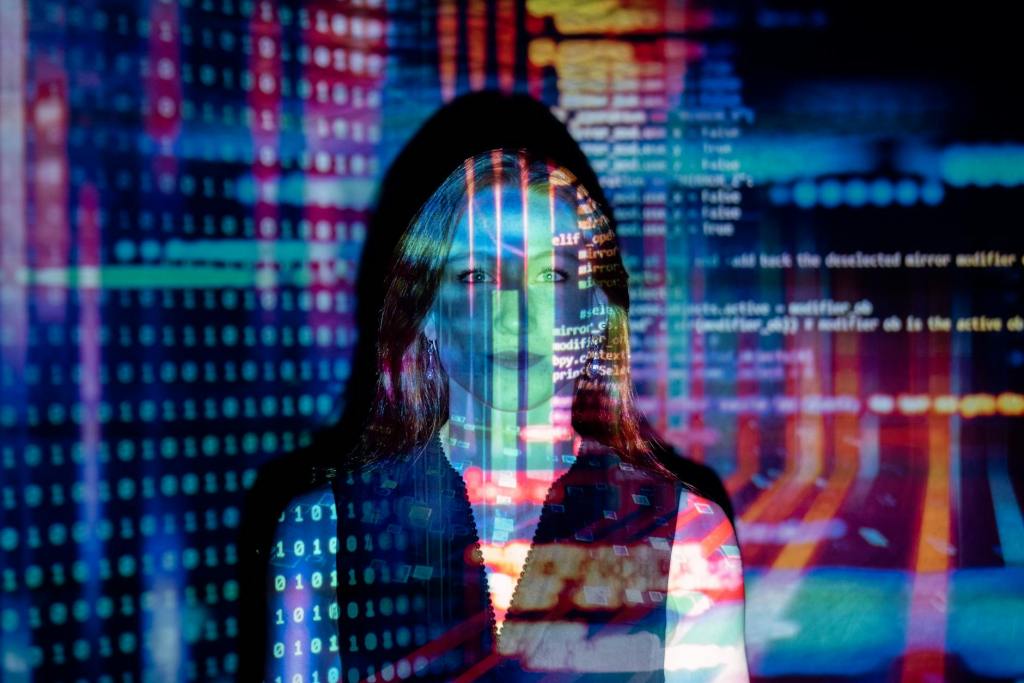

It’s easy to look at the state of the internet and immerse ourselves in the idea that we are in a futuristic dystopia. Elon Musk in the White House, self-driving cars, the Grammys resembling a scene in the Hunger Games. You can pop on your headphones, blast some Grimes, and take a scroll through the internet to find within the sea of content, waves of search results and media that is ‘just not right’.
The progression of AI over the past year and a half alone has been intense. From videos of Dwayne ‘The Rock’ Johnson where his face and hands twist and form other shapes, barely a human figure at all; to a completely AI generated video of him eating pasta, all appearing normal.
Now, there is content out there, unreal, but realistic enough to trick us (and it does) into believing it is authentic. False information and search results, fake images and even voices. The dark potential of such a tool is undoubtedly worrying. It is scary, and enough for anyone to go down a dystopian doom spiral. Still, we are far from having android/human detective partners and holographic emanated girlfriends.
AI certainly poses a threat to myself and other creatives and academics. The ones who write the things you read, paint the things you hang on your walls and collect the information you use for your research. Already, students need reminders that Chat GPT is not to be used for their academic work. All of this brings about the question, how do we know what’s real in the media anymore?
We don’t, and that’s what makes the rise in AI seem threatening. Now, even Google uses AI to answer common questions. Search for anything and it will put the AI generated answer before the websites and articles that have been backed by research, and more importantly, humans. Adverts all around the world are being released, clearly made by AI, and it is an unsettling trend indeed.
I asked a friend of mine, graphic designer Will Riley, what he thought on the topic. While he said AI hadn’t impacted his work personally, he said: ‘I think through machines my practice has become more efficient. Graphic design on a more digital medium however has been affected by AI as […] it has replaced imagery and in some instances, photoshop skills… I feel the need for real people is still a necessity, despite jobs being lost to the ease and acceptance of AI technology…’
So, while it does seem to have its impacts, fear not, it’s not all doom and gloom!
Yes, Elon Musk, founder of the AI company Neuralink, has been open about putting money in the development of AI for Tesla. On top of putting funding into Chat GPT, hoping to gain profits from its inevitable skyrocket in demand. What could possibly go wrong?
Well… it just didn’t develop fast enough for people to be interested, and the bajillionaire was left with his pockets slightly less overflowing than he expected.
Although the world panicked at its speedy advancement in facial recognition and fake online media – which, in the wrong hands, is definitely a terrifying reality – it is too slow to break free from its program, because a program is all it is. We won’t be seeing Will Smith hunting down a rogue bot anytime soon, just some pretty weird art and a giant glowing sphere in the middle of Vegas.
Don’t panic. Stay vigilant in what you’re consuming out there, and all will be fine.
 Splendid Fred Magazine
Leave a comment